
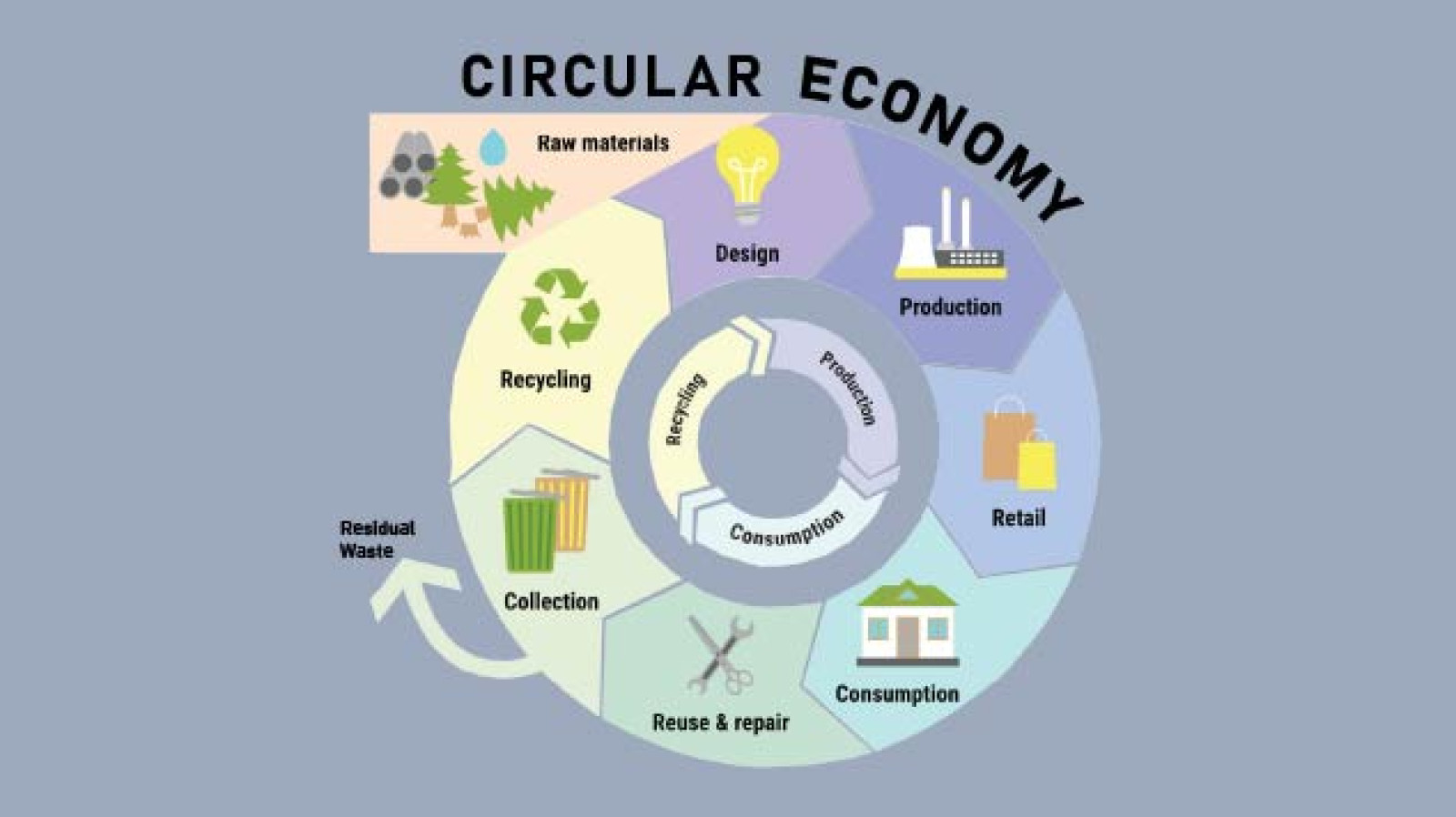
Importance of the circular economy, what is it?
The idea of a circular economy is to reduce waste and make the most of resources. By adopting these principles, we will reduce our impact on the environment, conserve resources and create a more sustainable future.
Why the interest?
Legislation, particularly in Europe, is driving companies to adopt circular business models through various means, including public procurement, financial incentives, and product regulations.
What does it involve?
- Design for Longevity: Products are designed to last longer, be easily repaired, and eventually recycled. This reduces the need for constant production of new items.
- Resource Efficiency: Efficient use of resources is prioritized, ensuring minimal waste during production and consumption.
- Reuse and Recycling: Materials and products are reused and recycled as much as possible. This includes upcycling, where old products are transformed into new ones with added value.
- Closed-Loop Systems: A circular economy operates in a closed loop where waste is minimized, and resources are continuously cycled back into the system.
- Sustainable Consumption: Consumers are encouraged to buy less, choose sustainable products, and support companies that prioritize environmental responsibility.
Corrugated packaging – Circular by Nature.
Corrugated board is not only renewable and recyclable but also one of the most recycled materials in Europe. In addition it protects goods on their journey, ensuring that the supply chain moves efficiently and sustainably.
The Forest Stewardship Council®, FSC®, operates the world’s most rigorous and trusted forest certification system. FSC is actively supporting the transition to a circular system, helping its certificate holders and stakeholders engage in the circular economy. Look out for FSC Recycled and FSC Mix certified products, that ensure forest-based fibres are in use for as long as possible, avoiding their disposal . Circularity will reduce the pressure on the environment, the forests, and their ecosystems.
In summary
A circular economy model where the lifecycle of products is extended, is much more sustainable than the linear model of take-make- consume- throwaway. Significant cost savings can be made by reducing packaging used, redesigning more durable and lightweight packaging, and minimising waste. Your customers will appreciate it too!
Find out more
Department for Environment, Food & Rural Affairs,
How we’re taking our circular economy message on the road
Building a Circular Economy: Best Practices for Retailers
FSC work on circularity
Visit FSC.org/circularity to get more information about FSC’s work on circularity
Circular nature of corrugated packaging
Read more about the circular nature of corrugated paper on the FEFCO website.